
How to Detangle Fine Hair Without Pulling
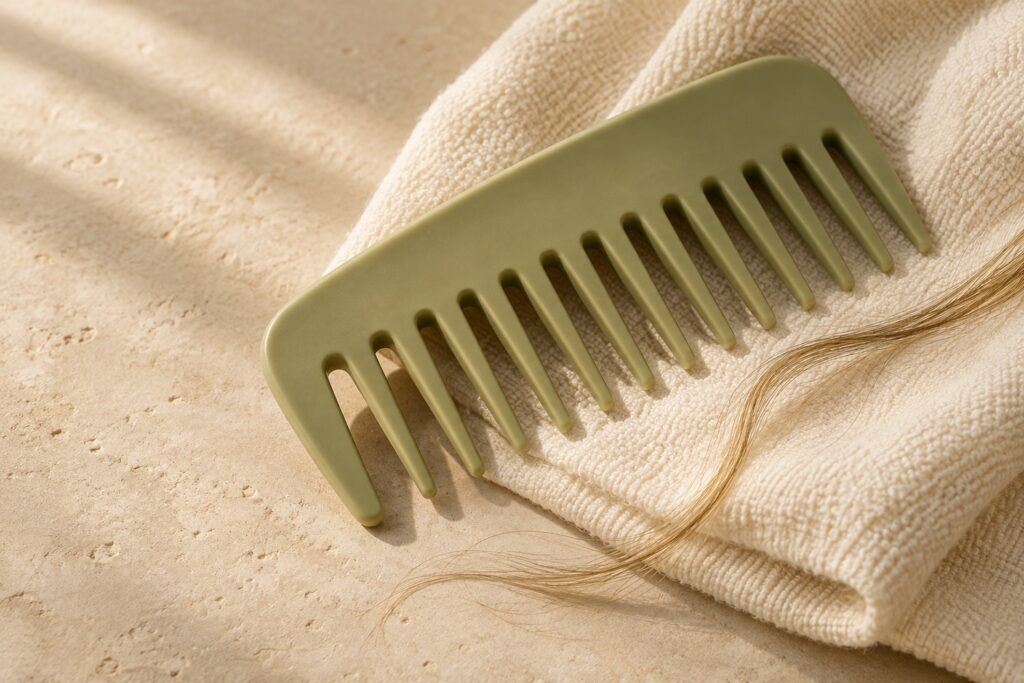
Wondering how to detangle fine hair without pulling? Hold a small section above the knot, start at the tips with a wide-tooth comb, and work upward in short strokes. When the comb catches, pause and loosen the knot with your fingers before trying again.
1. Choose when to comb after washing
After washing, gently squeeze out excess water with a soft towel or an old cotton T-shirt. Press and release as you work down the lengths. Wet hair needs a gentle touch, and rubbing it with a towel can cause damage.
If your fine hair is straight, let it partly air-dry before you comb. If it’s tightly curled or coily, try detangling in the shower while your conditioner is still on the lengths and the strands slide apart easily. Pick the timing that suits your texture. The American Academy of Dermatology’s hair-care guidance explains why the timing differs.
2. How to detangle fine hair from the ends up
Split your hair into two sections to start. If one side feels difficult to hold, split it again. Support a section just above the tangle with one hand and use a wide-tooth comb in the other. Start at the very tips. Once the comb moves freely through those ends, move a little higher and repeat.
If you’re choosing a comb, run your finger along its teeth first. They should feel smooth, with no rough edges that could catch your hair. Keep your strokes short, especially on the underside. If you’re hitting several knots together, work on a narrower section so you can see which strands are caught.
At the nape, bring one small section forward so you can see what you’re doing. Work through that section on its own before combining it with the rest. The Canadian Dermatology Association also recommends a wide-tooth comb and working from the ends up.
3. Loosen stubborn knots with your fingers
Take the comb out, keep holding the section, and use your fingertips to tease a few strands away from the outside of the knot. If the hair still catches, add a little detangler or lightweight leave-in to that spot, following the product directions. In the shower, the rinse-out conditioner already on your lengths can give you enough slip to finish before rinsing. Try the comb again once the knot starts to loosen.
If you find just one small knot in the middle of the day, you can use the same approach on that one section. For a tight mat that won’t loosen with gentle handling, a stylist can help you work through it.
4. Check where your hair keeps catching
On your next wash day, pay attention to where the comb first snags. If it’s always the underside, give that section a little more time. If the ends feel rough while your roots already look oily, start with this fine-hair routine for oily roots and dry ends. You’ll also find more routines in the Natural Care blog.
5. Keep everyday tangles from building up
If the same area keeps knotting, think about what rubs against it. A scarf, a high collar or a bag strap can catch the same section over and over. Try bringing your hair forward over one shoulder before putting on your coat or bag. When taking out a ponytail, unwrap the hair tie one loop at a time so it doesn’t drag through the ends.
If you wake up with tangles at the nape, try a loose braid on dry hair before bed, if it’s long enough. Leave the braid relaxed at the roots and use a soft tie. In the morning, check the underside first and work through any small knots with your fingers.
Want a simple place to start? Create your free Natural Care account and start the free 7-day hair-care programme. The first lesson helps you get to know how your own hair behaves.